From bohemian open-air terraces to multi-million-dollar megaclubs, how a quiet Mediterranean island dictated the sound, structure, and soul of global nightlife for over four decades.
In the late summer of 1987, four young British DJs—Paul Oakenfold, Danny Rampling, Nicky Holloway, and Johnny Walker—walked onto the open-air terrace of a converted farmhouse in the middle of a Spanish island. The club was Amnesia. The man in the DJ booth was an Argentine expat named Alfredo Fiorito. What the British contingent witnessed that night was not just a party, but an entire subversion of how clubbing was supposed to work. Alfredo was fearlessly blending early Chicago house records with Euro-pop, Peter Gabriel, and obscure dub tracks under the Balearic stars. There was no dress code, no pretense, and no musical boundaries.
The group returned to London permanently altered, launching club nights like Shoom and Spectrum that would ignite the UK’s Second Summer of Love and the acid house explosion. But the real story isn’t just about what they took back to Britain; it’s about the island they left behind. Ibiza did not just casually observe the electronic music revolution—it engineered it. Over the next forty years, the clubs of Ibiza would evolve from dusty, hedonistic hideaways into the most influential architectural and cultural monoliths in electronic music, dictating the trends that eventually ripple out to every festival mainstage and underground basement in the world.
The Farmhouses and the Freedom of the Balearic Beat
To understand the bedrock of Ibiza’s clubbing mythology, one must look at its socio-political timing. The island had been a haven for draft dodgers, hippies, and bohemian artists throughout the 1960s, but following the death of Spanish dictator Francisco Franco in 1975, a massive wave of cultural liberation swept through the country. Ibiza, already culturally detached from the mainland, leaned into this newfound freedom with aggressive hedonism.
Ricardo Urgell opened Pacha in 1973, designing it to resemble a traditional finca (farmhouse). Unlike the dark, sweaty basements of London or Chicago, Pacha was glamorous, sprawling, and intrinsically linked to the Mediterranean climate. Soon after, Ku (which would later become the gargantuan Privilege) and Amnesia established themselves as the island’s primary nocturnal playgrounds.
The defining characteristic of this era was the open roof. Clubbing was an outdoor activity. It was on these terraces that the “Balearic Beat” was born. DJs like Alfredo didn’t have the luxury of perfectly curated subgenre crates; they had to keep a wildly diverse, chemically enhanced crowd dancing from 3 AM until mid-morning. This necessitated an eclectic, anything-goes mixing style that treated a pulsating synthesizer and a Spanish guitar with equal reverence. This open-minded approach became the island’s first major export, proving to the world that dance music didn’t have to be rigid to be effective.
The Space Terrace and the Cult of the Daytime Rave
If Amnesia birthed the Balearic spirit, Space institutionalized the marathon rave. Opened in 1989 by local impresario Pepe Roselló, Space Ibiza capitalized on a loophole in Spanish licensing laws that required clubs to close for at least a few hours a day. Roselló’s genius was simply opening Space in the morning, right as the other clubs were forcing people out into the daylight.
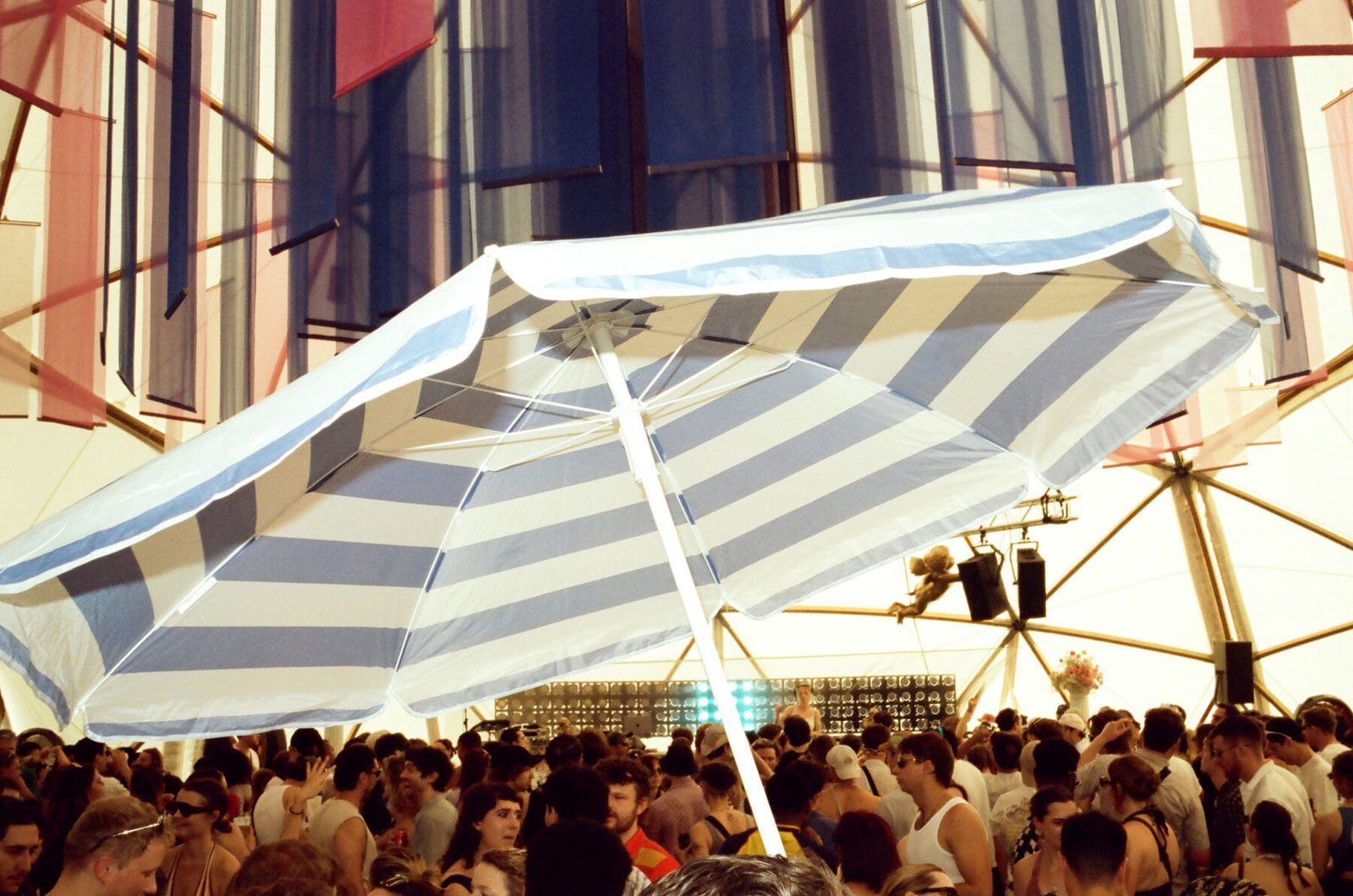
The Space Terrace became the most famous dancefloor on the planet. Clubbers would cheer as low-flying passenger jets roared over the club on their final approach to the nearby airport. The daytime setting completely altered the dynamic of the party; without the cover of darkness, the vibe was inherently friendlier, more communal, and hyper-focused on the music.
It was here that the concept of the superstar DJ residency truly crystallized. Carl Cox’s 15-year residency at Space didn’t just cement his status as a global icon; it established the blueprint for how modern DJs build their brands. A successful summer residency at Space meant you could command top-tier booking fees anywhere in the world from October to May. The club became the ultimate proving ground, shifting the global industry’s focus from releasing hit records to delivering transcendent live experiences.
DC-10 and the Underground Resistance
By the turn of the millennium, Ibiza was changing. Following complaints from local residents, the government forced the clubs to build roofs over their legendary open-air terraces. The acoustic freedom was gone, replaced by heavy air conditioning and soundproofing. Simultaneously, the island caught the attention of the global elite. VIP tables, bottle service, and massive entry fees began to crowd out the egalitarian ethos that had defined the 1980s and 90s.
In 1999, as a direct counter-movement to the velvet ropes of Pacha and the colossal scale of Privilege, Italian promoters Andrea Pelino and Antonio Carbonaro launched a Monday morning party called Circoloco at a rundown former airplane hangar at the end of the runway. The club was DC-10.
Circoloco stripped clubbing back to its absolute rawest elements: blood-red walls, a punishing sound system, and zero VIP pretensions. The party started on Monday mornings, catering directly to the island’s workers, bartenders, and degenerate ravers who refused to let the weekend end. DC-10 became the incubator for the global minimal and tech-house movements, launching the careers of artists like Seth Troxler, The Martinez Brothers, and Jamie Jones. It proved that despite the influx of billionaires and mega-yachts, Ibiza still possessed a ferocious underground heartbeat.
The Tech-Driven Empire: Ushuaïa, Hï, and the Modern Era
The most significant tectonic shift in recent Ibiza history occurred in 2016 with the emotional closure of Space. The lease was taken over by Ushuaïa Entertainment (The Night League), spearheaded by visionary promoter Yann Pissenem. They gutted the historic venue and reopened it as Hï Ibiza.
This transition marked the complete modernization of the island. While the romance of the dusty farmhouses was fading, the sheer technological ambition of the new era was staggering. Today, clubs like Hï and its outdoor sister venue Ushuaïa operate more like Olympic-level production facilities than traditional nightclubs. They are the research and development departments for the global festival circuit.
When Tale of Us brings their ‘Afterlife’ residency to Hï, or when Black Coffee commands the Saturday night room, the visual mapping, kinetic lighting, and bespoke sound design set the gold standard for the rest of the industry. The massive LED screens and hyper-curated aesthetics tested in Ibiza in July are exactly what audiences will see at major festivals in Miami, Amsterdam, and São Paulo the following year.
Ibiza is an easy target for cynics. It is undeniably expensive, fiercely commercialized, and miles away from the lawless, bohemian utopia of the 1970s. Yet, its gravitational pull remains absolute. No other location on earth possesses the infrastructure, the history, or the singular concentration of industry power. The clubs of Ibiza are not merely venues that host DJs; they are the architects of the culture. From the open-air freedom of the original terraces to the sensory overload of the modern megaclubs, the White Isle remains the undisputed capital of dance music because it understands one fundamental truth: the world will always follow the rhythm of the island.
From the bohemian open-air terraces of the 1980s to the technological dominance of modern megaclubs, discover how Ibiza’s legendary venues built the blueprint for global dance music culture.